
The 10-Minute Vanishing That Turned a German Forest Into a Scene of Horror
It was supposed to be a simple ride home.
Ten minutes through a peaceful forest path in Bavaria.
A route so familiar that nobody imagined danger could be waiting there.

But on a quiet evening in September 1981, ten-year-old Ursula Herrmann disappeared during that short bicycle ride — and what investigators eventually uncovered beneath the forest floor would horrify all of Europe.
Even decades later, the case still feels less like reality and more like the plot of a psychological thriller.
A child vanishes without a sound.
A bicycle lies abandoned in the woods.
And beneath the earth, hidden in silence, authorities uncover evidence of a terrifyingly calculated plan.
The story began on September 15, 1981, in the quiet Bavarian region near Lake Ammersee in southern Germany. At the time, the area was known for its peaceful villages, family traditions, and dense forests connecting nearby communities through narrow dirt trails and bicycle paths.
Children often traveled alone without fear.
People trusted the safety of the countryside.
That sense of security would soon be destroyed forever.
Ursula Herrmann had spent part of the evening visiting relatives in Schondorf, a small village surrounded by wooded trails. As daylight faded, she climbed onto her bicycle and began the short ride back to her family home in Eching am Ammersee.
The route should have taken less than ten minutes.
She never arrived.
At first, there was confusion rather than panic.
Perhaps she stopped somewhere unexpectedly.
Perhaps the bicycle chain broke.
Perhaps she simply lost track of time.
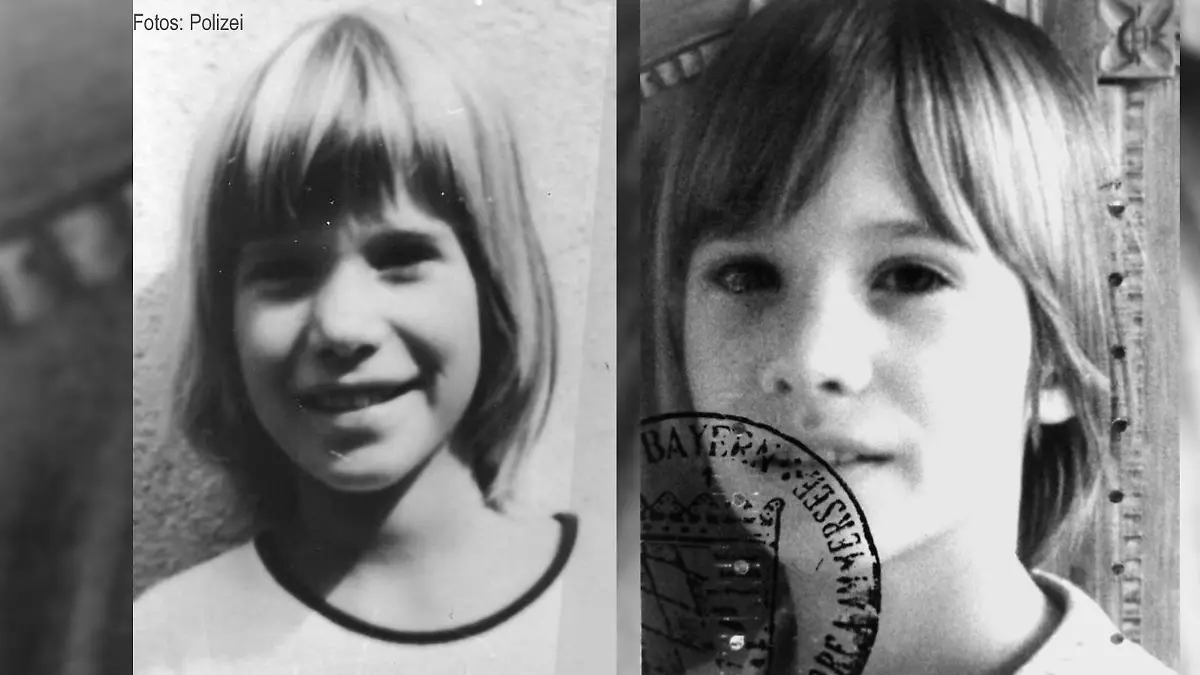
But as darkness settled over the forest and Ursula still had not returned, her family realized something was terribly wrong.
Relatives immediately rushed to search the forest path she should have taken.
Then they found the bicycle.
Lying alone on the dead leaves beneath the trees.
Undamaged.
Silent.
There were no signs of violence.
No visible struggle.
No blood.
No footprints.
Nothing.
It was as if the little girl had vanished into thin air.
That single image — a child’s bicycle abandoned in the dark Bavarian woods — would soon terrify an entire nation.
Police launched a massive search operation almost immediately. Officers, volunteers, helicopters, search dogs, and local residents combed through the forest for any clue explaining what happened.
But the woods revealed nothing.
Days passed.
Then the situation became even darker.
Ursula’s family received a ransom demand.
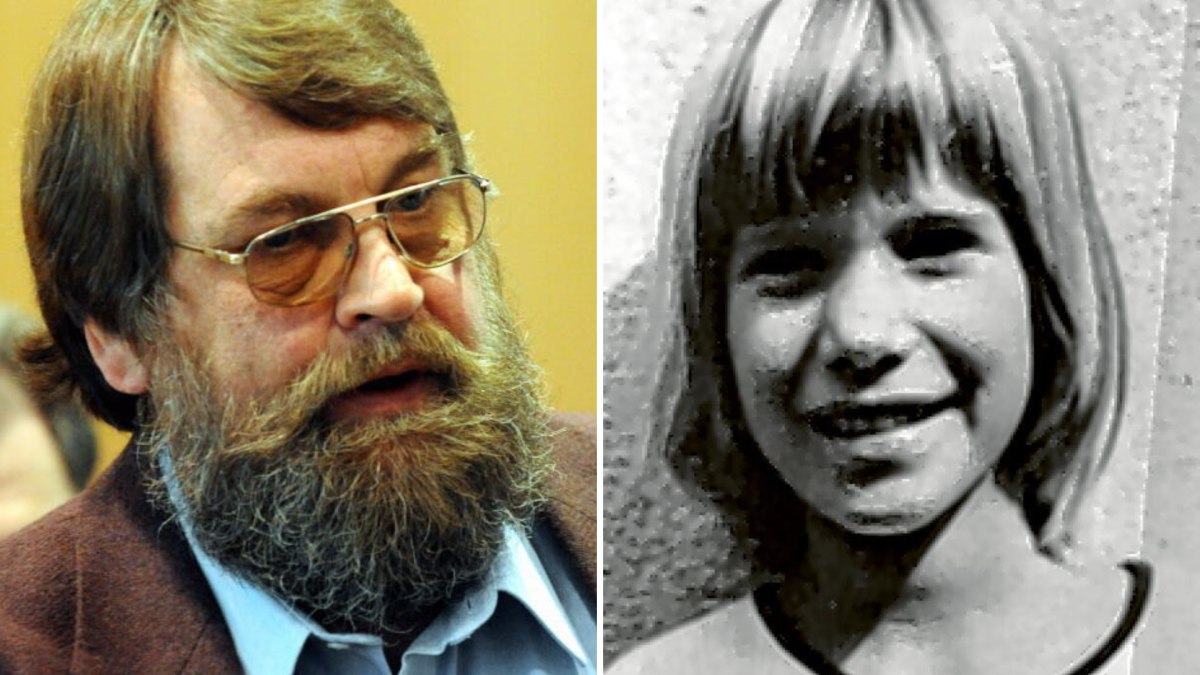
The letter claimed the child had been kidnapped and demanded a massive payment in exchange for her safe return. The kidnapper warned the family not to involve police and insisted Ursula was still alive.
Germany was instantly consumed by fear.
News broadcasts interrupted regular programming to cover the case. Newspapers printed Ursula’s smiling photograph nationwide. Parents across the country suddenly feared allowing children to travel alone anywhere.
The emotional terror spread rapidly because the crime felt random and impossible to predict.
If a child could disappear from a quiet forest path in peaceful Bavaria, nowhere truly felt safe anymore.
Meanwhile, investigators faced enormous obstacles.
There were no witnesses.
No clear suspects.
Almost no forensic evidence.
And still no sign of Ursula herself.
Yet police increasingly believed something highly organized had occurred.
The ransom letter suggested preparation.
Planning.
Calculation.
Someone had clearly thought this through in advance.
But nobody could imagine just how disturbing the truth would become.
Then, nearly three weeks after Ursula disappeared, investigators made a discovery buried deep inside the forest that stunned Germany into silence.
Hidden beneath the earth was a large underground wooden structure carefully concealed beneath soil and leaves.
At first glance, it looked almost unreal.
But once investigators opened the underground chamber, the horrifying reality became clear.
The structure had been built specifically to imprison a child underground.
Inside the hidden chamber, police discovered blankets, food supplies, battery-powered lighting, water containers, and a ventilation system connected to the surface through plastic tubes.
And inside that underground prison, they found Ursula Herrmann.
Dead.
The discovery traumatized the nation.
Experienced investigators reportedly struggled emotionally after entering the chamber themselves. The realization that a child had been buried alive beneath the forest floor while search teams looked for her overhead created a level of horror almost impossible to process.
The underground structure itself became one of the most infamous crime scenes in European criminal history.
Because this was not an impulsive act.
It required planning.
Construction.
Engineering.
Patience.
Someone had spent significant time designing and building a hidden underground prison box beneath the forest.
That realization terrified people more deeply than almost any other aspect of the crime.
Authorities later concluded Ursula likely died after the ventilation system inside the chamber failed.
That detail made the tragedy almost unbearable emotionally.
Because it meant the child may have remained alive underground for hours — perhaps even longer — trapped in darkness while rescue operations unfolded only a short distance away.
Germany struggled psychologically with that possibility for years afterward.
Parents imagined the fear.
The silence.
The confusion of a child trapped beneath the earth waiting for help that never came in time.
The emotional impact of the case permanently changed public attitudes toward child safety throughout Germany.
The countryside no longer felt innocent.
Forests no longer felt peaceful.
And parents no longer assumed ordinary routines guaranteed safety.
Meanwhile, investigators desperately searched for the person responsible.
Who could design something like this?
The underground chamber suggested technical knowledge and careful preparation. Investigators believed the kidnapper likely possessed practical engineering or mechanical skills due to the complexity of the ventilation and electrical systems installed underground.
Rumors spread everywhere.
Some suspected organized criminals.
Others believed the perpetrator was someone local who understood the forest terrain intimately.
The lack of immediate answers only intensified public fear.
The case quickly became one of Germany’s most haunting unsolved mysteries.
Over the years, investigators pursued countless leads and theories. The ransom recordings, technical materials used in the chamber, and geographic familiarity of the forest all became critical parts of the investigation.
But despite enormous public pressure, definitive answers remained elusive for decades.
The mystery surrounding the underground structure itself became central to public obsession with the case.
People could not stop asking:
How long had it been there?
Who built it?
And perhaps most chillingly of all:
Was Ursula specifically targeted, or could any child riding through those woods have become the victim?
That question terrified parents across Europe.
Because randomness makes horror feel universal.
If there was no specific reason Ursula was chosen, then every child suddenly felt vulnerable.
Years later, renewed investigative efforts eventually focused suspicion on Werner Mazurek, a local man accused by authorities of involvement in the kidnapping and underground chamber construction.
The case against him became highly controversial.
Supporters of the prosecution argued evidence connected him to ransom communications and technical elements of the crime.
Critics insisted the evidence remained circumstantial and emotionally influenced by decades of pressure to solve the case.
Even today, debate surrounding the full truth of the investigation continues among legal analysts and true-crime researchers.
But regardless of ongoing controversy, one aspect of the case has never lost its emotional power:
The underground chamber itself.
Because unlike many crimes driven by sudden violence or impulse, this one reflected terrifying patience and deliberate preparation.
Someone calmly constructed a hidden prison beneath the forest floor while ordinary life continued peacefully above.
That idea still horrifies people hearing the story for the first time today.
Modern true-crime audiences remain fascinated by the Ursula Herrmann case precisely because it combines several primal fears into one terrifying narrative:
A missing child.
A silent forest.
An unseen predator.
And a hidden underground chamber waiting beneath ordinary ground where nobody thought to search.
The case feels almost surreal because every detail sounds too horrifying to exist outside fiction.
Yet it happened.
And for Germany, the emotional scars never fully disappeared.
Even now, the forest near Schondorf appears calm and beautiful on the surface. Sunlight still filters through the trees. Cyclists still ride narrow paths through the Bavarian countryside. Families still walk peacefully beneath the same branches where Ursula disappeared decades ago.
But beneath those woods once lay one of Europe’s darkest secrets.
A hidden underground prison.
A terrified child.
And a mystery that transformed a peaceful ten-minute bicycle ride into a nightmare still haunting Europe more than forty years later.
Because sometimes the most horrifying truths are not hidden far away.
Sometimes they are buried quietly beneath places people once trusted completely.