
THE SHADOW BEHIND THE SOFA: Was the Madeleine McCann Case a Forensic Illusion?
The date was May 3, 2007. The location: Praia da Luz, a sun-drenched pocket of the Algarve where the Atlantic breeze usually carries the scent of salt and hibiscus. But for nineteen years, that same breeze has carried a chilling question that refuses to settle. We have been fed a narrative—a story of a “predatory abduction” that vanished into the night. But what if the most damning evidence never left the room?
What if the true story isn’t about who walked into Apartment 5A, but what happened to those who never walked out?
The “Frumpled” Curtain: A Silent Witness
Look closely at the crime scene photographs of the lounge in Apartment 5A. Most people focus on the empty bed or the window, but the real enigma lies in the blue curtains behind the sofa.
Detective Gonçalo Amaral, the lead investigator whose career was eventually immolated by this case, pointed out a detail that haunts investigators to this day: the left side of the curtain was “frumpled.” It wasn’t just hanging; it was caught, snagged, and distorted. In a room where every second counted, why was that curtain disturbed?
Amaral’s initial theory was simple: a police officer must have moved it during the search. But as the investigation deepened, a far more sinister possibility emerged. It wasn’t just the curtain that moved. It was the heavy sofa in front of it.
The Geometry of a Lie
In his controversial book, The Truth of the Lie, Amaral highlights a moment during the third and final interview with Gerry McCann. The focus shifted to that specific blue curtain. According to the detective, someone had physically pushed the sofa against the wall—a move that subsequently trapped the curtain in that “frumpled” position.
When questioned, Gerry admitted to moving the sofa. The reason? He claimed the children wouldn’t stop playing behind it. On the surface, it’s a mundane parental chore. But in the world of forensics, there are no coincidences.
The Curiosity Loop: If the children were playing behind the sofa, they were in a narrow, dangerous gap between a heavy piece of furniture and a wall with a window. Amaral suggests this was the “epicenter” of the crime scene. He theorizes that Madeleine didn’t vanish into the night—she fell.
Imagine the hypothesis: An accident. A fall from the back of the sofa or the balcony, leading to a catastrophic injury. If a child falls and dies, and you are a high-profile professional in a foreign country, do you call the police, or do you panic? Do you push the sofa back against the wall to hide the “playground” where the tragedy occurred?
Eddie and Keela: The Dogs Who Never Forget

To understand why the “Sofa Theory” carries such weight, we must look at the most specialized investigators on the team: Eddie and Keela. These weren’t ordinary police dogs. Eddie was a cadaver dog; Keela was a blood dog. Their noses were calibrated to detect the molecular signature of death and human blood, even after surfaces had been scrubbed with bleach.
When Eddie entered Apartment 5A, his behavior changed instantly. He didn’t just search; he became agitated. He alerted in two primary locations:
-
The Master Bedroom: Suggesting a body had rested there long enough to leave a “scent pool.”
-
Behind the Sofa: The exact spot where the curtain was frumpled and the furniture had been moved.
But here is where the story turns from a tragedy into a conspiracy.

The Forensic Charade: The 99.9% Match that Vanished
In August 2007, a Portuguese lab delivered a bombshell: samples collected from behind the sofa and from the trunk of the McCanns’ rental car (hired after the disappearance) were a 99.99828% match for Madeleine McCann.
In any other case, this would be the “Smoking Gun.” It suggested that a deceased Madeleine had been behind that sofa and later transported in the trunk of a Renault Scenic.
However, the British Forensic Science Service (FSS) later stepped in. They claimed the sample was “too complex.” They argued that because Madeleine shared 50% of her DNA with each parent and her siblings, a “partial match” could be coincidental. Suddenly, the 99% certainty melted away into a 20% “missing component” technicality.
Mark Harrison, a high-level investigator, later suggested on camera that the FSS work could be summed up in one word: Manipulation. Why would a world-class lab deconstruct a near-perfect match? Who stood to gain from the “Abduction” theory over the “Domestic Accident” theory?
The 15 Blonde Hairs and the Scenic Renault
The mystery deepens when we look at the rental car. Investigators found 15 blonde hairs in the trunk of the Renault Scenic. In a car rented weeks after the child disappeared, how do 15 hairs belonging to the victim end up in the spare wheel well?
The official report stated it was “impossible to determine” if they belonged to Madeleine. This is the “Forensic Charade” in its purest form. In a case of this magnitude, how does the most advanced forensic technology in the world fail to identify 15 hairs?
The “Cuddle Cat” and the Scent of Death
Perhaps the most heartbreaking and puzzling piece of evidence is “Cuddle Cat,” Madeleine’s favorite stuffed toy. When the cadaver dogs were presented with the toy, they alerted to the scent of death on it.
This creates a harrowing timeline. For a cadaver dog to alert, a body must be deceased for a significant amount of time—not just a few minutes. If Madeleine died in an accident behind the sofa, and her toy was near her body for hours before being placed back on her bed, the dog’s alert makes perfect sense. If she was snatched by a stranger in seconds, the alert is impossible to explain.
The Mystery of the Digital Camera
There is one more silent witness: a silver digital camera left on the dining table. Detective Amaral was desperate to see its contents. He wanted the metadata—the digital footprints of where the family had been, what they ate, and exactly how they were dressed.
Curiously, the original memory card was never provided in its raw form. Instead, the photos were handed over on a CD-R. In the world of high-stakes investigation, changing the medium of evidence is a cardinal sin. It wipes the metadata. It erases the “when” and the “where.”
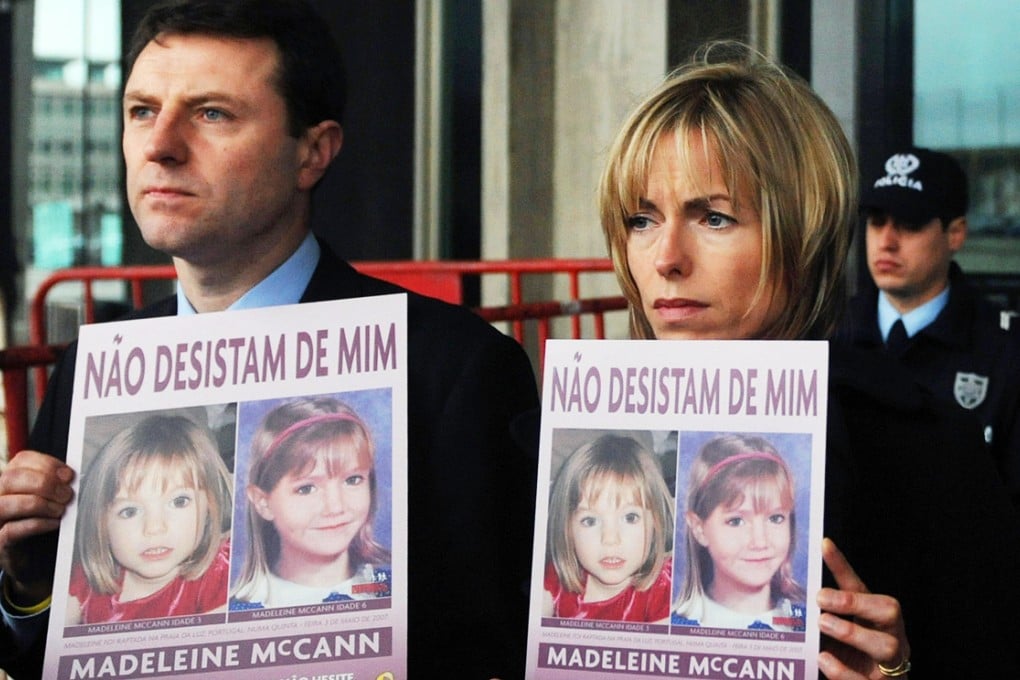
Furthermore, why were no photos from that actual holiday used on the initial “Missing” posters? They used an old photo of Madeleine in a sun hat, taken months prior. If you want a child to be found now, you show the world what she looked like today. Unless, of course, you don’t want her to be recognized.
Conclusion: A Fracture in the Truth
The Madeleine McCann case is not just a mystery of a missing girl; it is a battleground of forensic politics. Between the “frumpled” curtain, the moved sofa, the manipulated DNA reports, and the silent alerts of the dogs, a different story emerges.
It is a story of a “death zone” hidden in plain sight. It is a story of how 21% of a DNA profile can be used to silence 79% of the truth.
Nineteen years later, the “abduction trail” has not just gone cold—it has been frozen by the weight of unanswered questions. The truth behind that blue sofa remains, waiting for someone brave enough to pull back the curtain for good.